
TMJ/TMD Treatment
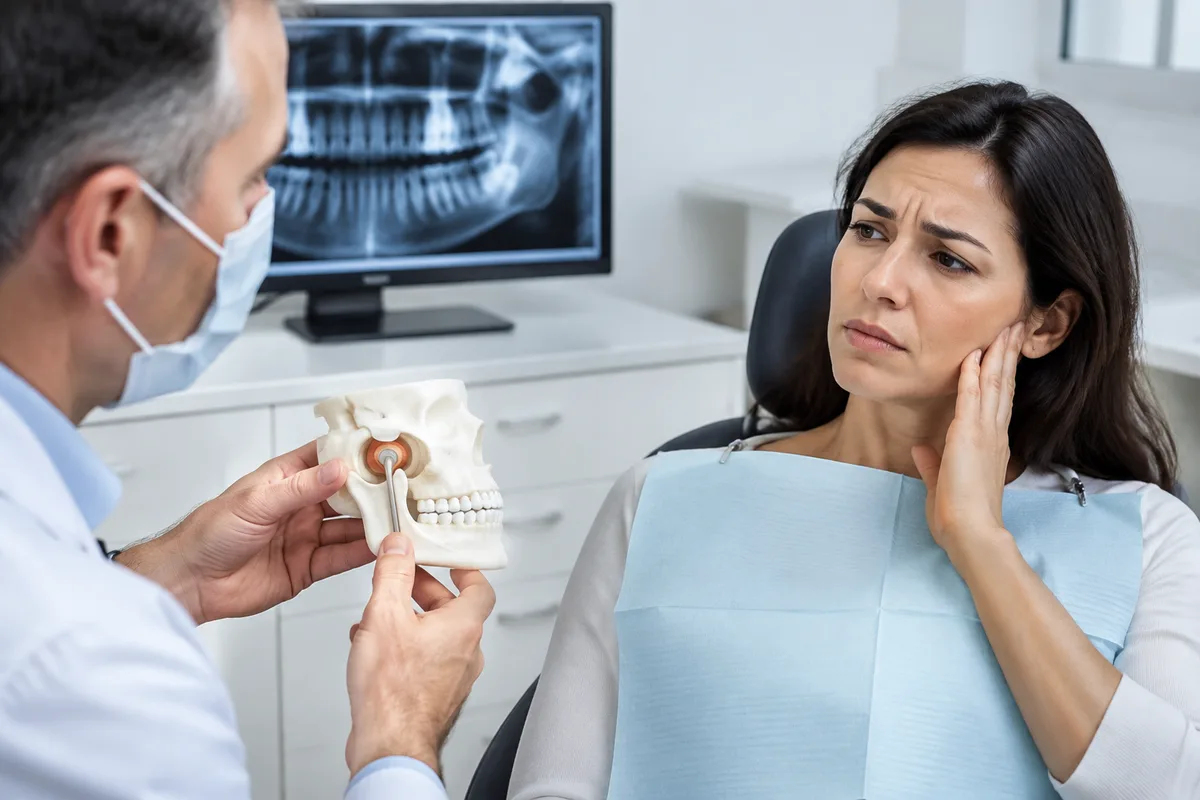
TMJ/TMD Treatment
Jaw pain, clicking, or morning headaches can often be traced back to the temporomandibular joints — the hinges that connect your lower jaw to your skull. TMJ/TMD Treatment addresses discomfort or dysfunction in these joints and the surrounding muscles, which can develop from clenching, grinding, jaw injury, or joint wear over time. If you're dealing with jaw tightness, difficulty opening your mouth fully, or an uneven bite, a dental evaluation can help identify what's contributing to it.
What TMJ/TMD Treatment Can Involve
- Evaluation of jaw function — checking range of motion, joint sounds, and muscle tenderness.
- Imaging of the jaw joints — a panoramic X-ray captures both jaws and the joint area in one wide image, giving a clear view of joint position and bone structure.
- Bite assessment — looking at how the teeth meet and whether uneven contact is placing extra strain on the joints.
- Night guards — a custom appliance can reduce the impact of clenching or grinding on the jaw joints and teeth, particularly for symptoms that show up at night or first thing in the morning.
When to Bring It Up
Not every jaw click needs treatment, but persistent pain, a jaw that locks or catches, or headaches concentrated near the temples and jaw are worth mentioning at a routine exam or a dedicated visit. Bringing up symptoms early gives us more options for addressing them before habits like clenching cause additional wear on your teeth or restorations.