Our Services
Cosmetic Dentistry: What It Can and Cannot Do
Cosmetic dentistry is not a separate specialty. It is a set of ordinary restorative techniques applied with appearance as a primary goal alongside function. That distinction matters, because the most common way a cosmetic case goes wrong is when appearance is pursued without regard for the bite, the gums, or how much healthy tooth is destroyed to get there.
A good cosmetic plan is conservative, sequenced correctly, and honest about what each option can deliver.
Start by naming the actual complaint
People usually arrive saying they want a better smile. Underneath that is normally one specific thing: the color, a chipped edge, a gap, one tooth that sits forward, teeth that look short, or too much gum showing.
The reason to be precise is that the least invasive treatment that solves the actual complaint is almost always the best one. Someone unhappy with color needs whitening, not veneers. Someone with one rotated tooth may need alignment, not eight crowns. A single chipped edge is often a thirty-minute bonding appointment.
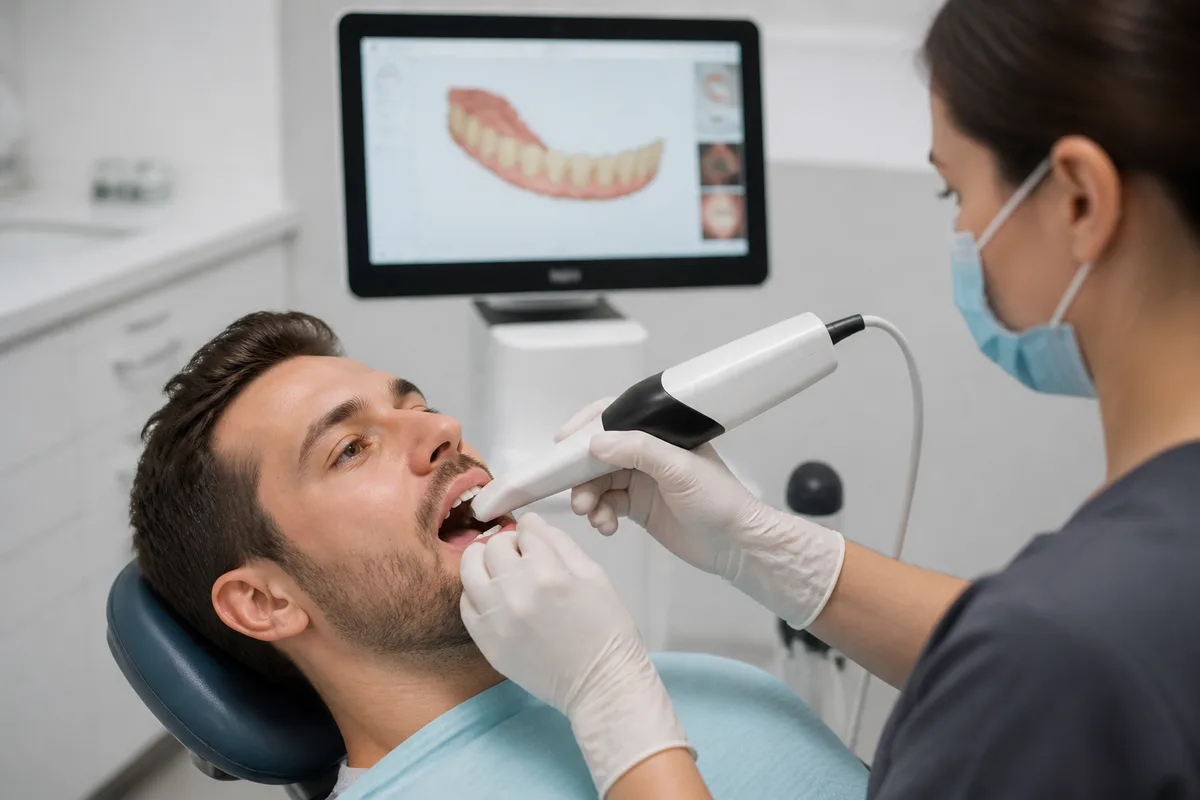
Photographs, a digital design preview, or a temporary mock-up placed directly over your teeth without any preparation let you see a proposed result before committing to anything irreversible. For any significant case, that step is worth insisting on.
The conservative end of the menu
Whitening addresses color alone and changes nothing about shape or position. It is reversible in the sense that it wears off, involves no removal of tooth structure, and is by far the highest-impact option per dollar for most people.
Bonding adds composite resin directly to a tooth to repair a chip, close a small gap, lengthen a short tooth or mask a discolored spot. It requires little or no removal of enamel, is completed in one visit, and can be adjusted or removed later. It stains over time and is less durable than porcelain, but the trade-off is often worth it.
Enamel recontouring, in which minute amounts of enamel are smoothed to even out edges, is quick and sometimes transforms an uneven smile line with almost no intervention. Gum contouring with a soft tissue laser reshapes an uneven or low gumline and addresses the common complaint of teeth looking too short.
Veneers, crowns, and the cost of covering a tooth
Porcelain veneers are thin facings bonded to the front of teeth. They can change color, shape, size and apparent position all at once, and a well-executed case looks superb. They also usually require removing a layer of enamel, which does not grow back, so the tooth is committed to being restored for the rest of your life.
This is not a reason to avoid them, but it is a reason to be sure they are the right answer. If alignment is the main problem, orthodontics moves teeth without removing any of them. If color is the main problem, whitening does not touch the tooth at all. Veneers are the right choice when shape, color and minor position all need to change together and the teeth are already restored or worn.
Crowns cover the whole tooth and are indicated when a tooth is structurally compromised as well as unattractive. Choosing a crown for a cosmetic reason on an otherwise healthy tooth is the most aggressive option available and should be a considered decision, not a default.
Sequence is everything
Certain steps have to happen in a specific order or the result is compromised. Active decay and gum disease are treated first, because bonding porcelain to an unhealthy foundation wastes the work.
Alignment comes before restoration where both are planned, since moving a tooth into the right position frequently reduces how much restorative work is needed. Whitening comes before any new tooth-colored restorations, because those are matched to your teeth on the day they are made and will not lighten later. Gum contouring, when needed, precedes veneers so that the margins can be placed against the final gumline.
A plan that gets this order wrong produces the classic outcome where new crowns are noticeably darker or lighter than the teeth beside them.
Setting realistic expectations
Natural teeth are not uniform. Real enamel is translucent at the edges, slightly different in shade from tooth to tooth, and has surface texture that catches light. The very white, perfectly uniform look is achievable and some people want it, but it reads as artificial to most observers.
Age matters too. A smile designed with the proportions of a twenty-year-old can look incongruous on a sixty-year-old face. The best cosmetic work is the kind people do not identify as dental work.
Nothing here is permanent maintenance-free. Porcelain lasts a long time but eventually needs replacing; bonding needs polishing and occasional repair; whitening needs touch-ups; and if you grind your teeth, a night guard is not optional after any of it. If you want to talk through what would actually address your specific concern, call Cedar Creek Dentistry in Portland.
Questions about your own care? The team at The Best Dentist In Portland, Oregon is happy to help — call us at (503) 646-1811.
This article is for general information only and is not medical advice.