Our Services
Dental Bridges: Filling the Gap
A bridge replaces one or more missing teeth with a fixed restoration anchored to the teeth on either side of the gap. It is cemented in place, is not removed by the patient, and has been a reliable solution for well over a century.
Implants have taken over many of the cases bridges once handled, but bridges remain the better choice in specific situations, and knowing which situations those are is the useful part.
Why the gap needs filling at all
Teeth are held in position partly by their neighbors and by the tooth they bite against. Remove one and the system destabilizes. Adjacent teeth tip into the space over months and years, and the opposing tooth erupts further out of its socket looking for contact.
The consequences are not merely cosmetic. Tipped teeth create angled spaces that trap plaque and are difficult to clean, which raises decay and gum disease risk in teeth that were previously healthy. An over-erupted tooth interferes with jaw movement and can make later restoration of the space impossible without treating that tooth too.
Chewing shifts to the other side, which loads that side disproportionately, and in the front of the mouth a missing tooth affects speech as well as appearance. Replacing a tooth is about protecting the remaining ones.
The types
A traditional fixed bridge uses crowns on the teeth on both sides of the gap, joined to a false tooth in between. It is strong, well proven and appropriate when those neighboring teeth are healthy enough to serve as supports and ideally already need crowns themselves.
A cantilever bridge is anchored on one side only. It is used where there is only one suitable adjacent tooth and is limited to areas of low biting force, because the leverage on the single support is considerable.
A resin-bonded bridge, often called a Maryland bridge, has a false tooth with thin wings bonded to the backs of the adjacent teeth. It requires almost no removal of tooth structure, which makes it an excellent conservative option for a single missing front tooth, particularly in a young person whose jaw is still growing and who cannot yet have an implant. Its weakness is that it can debond and need re-cementing.
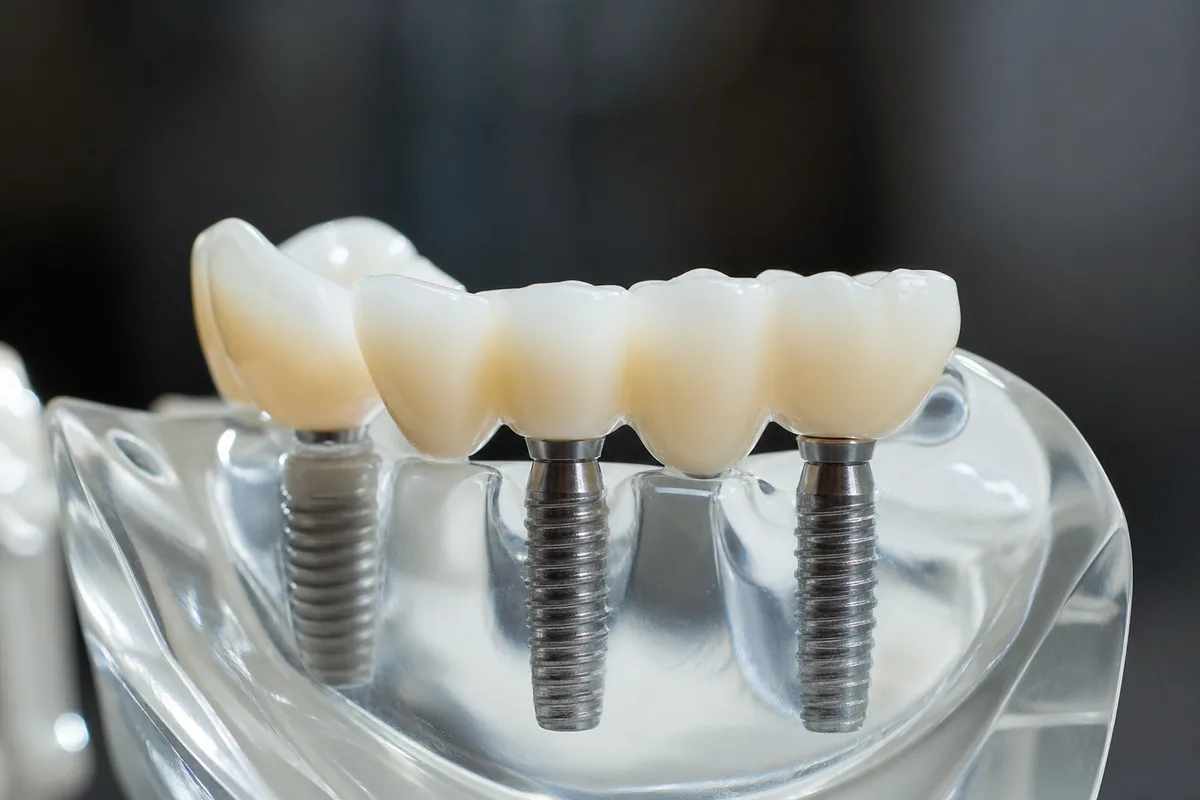
An implant-supported bridge uses implants rather than natural teeth as the supports, which avoids preparing healthy teeth and is the standard approach for longer spans.
What the appointments involve
The supporting teeth are numbed and prepared for crowns, meaning a layer is removed all around each so the bridge has room. If those teeth have large old fillings or decay, that is addressed at the same time and a build-up placed.
A digital scan or impression captures the prepared teeth, the gap and your bite, and the shade is matched. A temporary bridge is made and cemented while the laboratory fabricates the final one over two to three weeks.
At delivery, the fit, the contacts, the shape of the underside where it meets the gum, and the bite are all checked. The underside of the false tooth should touch the gum lightly enough to look natural but leave enough space to pass a cleaning aid underneath, which is a detail worth getting right because it determines how cleanable the bridge is for the next fifteen years.
Bridge or implant
A bridge is faster, usually finished within a month, requires no surgery, and costs less up front. It is often the better choice when the adjacent teeth already have large restorations or crowns, when there is insufficient bone for an implant and the patient does not want grafting, when a medical condition makes surgery inadvisable, or when time genuinely matters.
An implant preserves the neighboring teeth entirely, maintains the bone in the gap, is easier to clean because it is a standalone tooth, and cannot decay. It takes several months, involves surgery, and costs more initially.
The strongest argument against a bridge is that it commits two healthy teeth. If those teeth are pristine, removing enamel from both to replace a third is a significant trade. If they already need crowns, that objection largely disappears and a bridge can be the more sensible plan.
Cleaning and lifespan
The critical maintenance task is cleaning beneath the false tooth, where floss cannot pass normally because the units are joined. A floss threader, superfloss with a stiff end, an interdental brush or a water flosser is used to sweep underneath daily. This is not optional; plaque accumulating there causes gum inflammation and decay at the crown margins of the supporting teeth.
Bridges commonly last ten to fifteen years and frequently longer. When they fail it is almost always because a supporting tooth has decayed at its margin or lost bone support, not because the bridge itself broke.
If you have a gap you have been living with, it is worth having it assessed before the neighboring teeth move. Call Cedar Creek Dentistry in Portland.
Questions about your own care? The team at The Best Dentist In Portland, Oregon is happy to help — call us at (503) 646-1811.
This article is for general information only and is not medical advice.