Our Services
Dental Fillings: Materials, Process, and Aftercare
A filling is the most common restorative procedure in dentistry and the one most people have had. It is also frequently misunderstood as a repair that undoes the damage. It does not. A filling removes diseased tooth structure and replaces it with a material that seals the space, but the tooth is permanently smaller than it was.
That framing matters, because it explains why the size of a cavity when it is found determines almost everything that follows.
What a filling appointment involves
The area is numbed, usually with a topical gel first and then local anesthetic. Modern anesthetic is effective and the injection is the least comfortable moment of the visit for most people. Nitrous oxide is available if you find the process stressful.
Decay is then removed. Decayed dentin is softer than healthy tooth structure, and it is taken out until only sound structure remains, because any bacteria left underneath will continue to work. The remaining space is cleaned, conditioned, and in the case of tooth-colored materials, bonded.
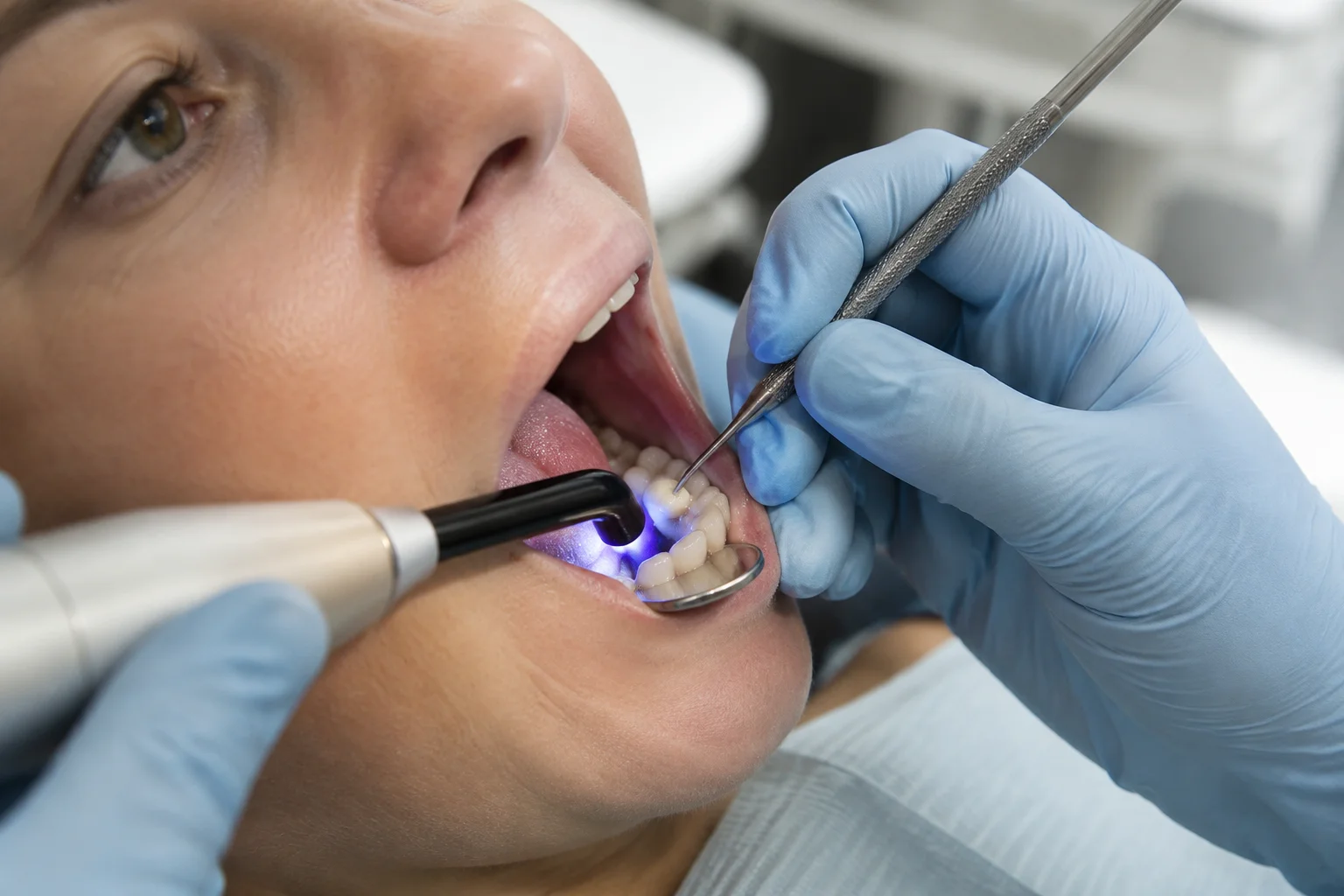
Composite is placed in layers, each cured with a bright light that hardens it in seconds. The filling is then shaped to restore the tooth's original anatomy and checked against your bite with marking paper. Getting the bite right is critical: a filling left a fraction of a millimeter high causes soreness for weeks and can crack the tooth. If your bite feels off after the numbness wears away, call us, because the adjustment takes two minutes.
Composite versus amalgam
Composite resin is a tooth-colored mixture of resin and glass filler that bonds directly to tooth structure. Because it bonds, it can be used in more conservative preparations, which means less healthy tooth is removed. It matches enamel closely, and it is what the large majority of fillings placed today are made from.
Amalgam, the silver-colored alloy, has been in use for over a century and is exceptionally durable, tolerant of moisture during placement, and inexpensive. It does not bond to the tooth, so it requires a preparation shaped to hold it mechanically, and it is obviously visible. Major health bodies have repeatedly reviewed its safety and found it acceptable for most patients, though many practices, including ours, now place composite by default.
For larger cavities, glass ionomer and resin-modified materials that release fluoride have specific uses, particularly at the gumline and in children. And when a cavity is large enough that a filling would leave weak, unsupported walls, the correct answer stops being a filling at all.
When a filling is no longer the right choice
Every tooth has a limit. Once a cavity or a failed old filling extends across a significant portion of the biting surface and undermines one or more cusps, replacing it with another large filling creates a tooth that is likely to fracture, often in a way that cannot be saved.
At that point an onlay or a crown, which covers and protects the remaining cusps rather than wedging material between them, is a better investment. This is the conversation behind a recommendation that surprises people: the tooth has had three fillings and the fourth should be something else.
If decay has reached the nerve, no restoration alone will resolve it and root canal treatment becomes necessary before the tooth can be rebuilt. Catching decay early is precisely how this ladder is avoided.
Sensitivity afterward is normal, up to a point
Cold sensitivity and tenderness to biting for a few days to a few weeks after a deep filling is common and usually resolves as the nerve settles. The deeper the cavity was, the more likely and the longer this lasts.
What is not normal is sensitivity that worsens over time, lingering pain that continues for more than thirty seconds after cold, spontaneous pain that wakes you at night, or throbbing. Those are signs of nerve inflammation that may not recover, and they should be evaluated rather than waited out.
Sharp pain only when biting down often means a high spot or a crack, both of which are straightforward to check.
Making a filling last
Fillings do not last forever. A composite in a molar commonly serves for seven to fifteen years, and the usual reason for replacement is new decay at the margin where filling meets tooth, not failure of the material itself.
That margin is a plaque trap, so flossing the contacts around a filled tooth every day is the single most useful habit. Grinding shortens the life of any restoration, and staining foods will discolor composite over the years, which is cosmetic rather than structural.
If you have a tooth that is sensitive, catching floss, or has an old filling you are unsure about, get it looked at while it is still a filling-sized problem. Call Cedar Creek Dentistry in Portland.
Questions about your own care? The team at The Best Dentist In Portland, Oregon is happy to help — call us at (503) 646-1811.
This article is for general information only and is not medical advice.