Our Services
Dentures: Full, Partial, and Implant-Supported
Dentures have a poor reputation built largely on the experience of people wearing old, ill-fitting appliances made decades ago. Materials, techniques and above all the option of implant support have changed what is achievable considerably.
They remain, for many people, the practical way to restore a full arch. Knowing what each type does well, and what none of them do, makes for a much better experience.
The main types
A complete denture replaces all the teeth in one jaw and rests on the gum ridge. Upper dentures cover the palate, which creates a suction seal and gives them substantially better retention than lower dentures, which must sit on a horseshoe-shaped ridge with a tongue moving beside them. That asymmetry is the source of most denture complaints.
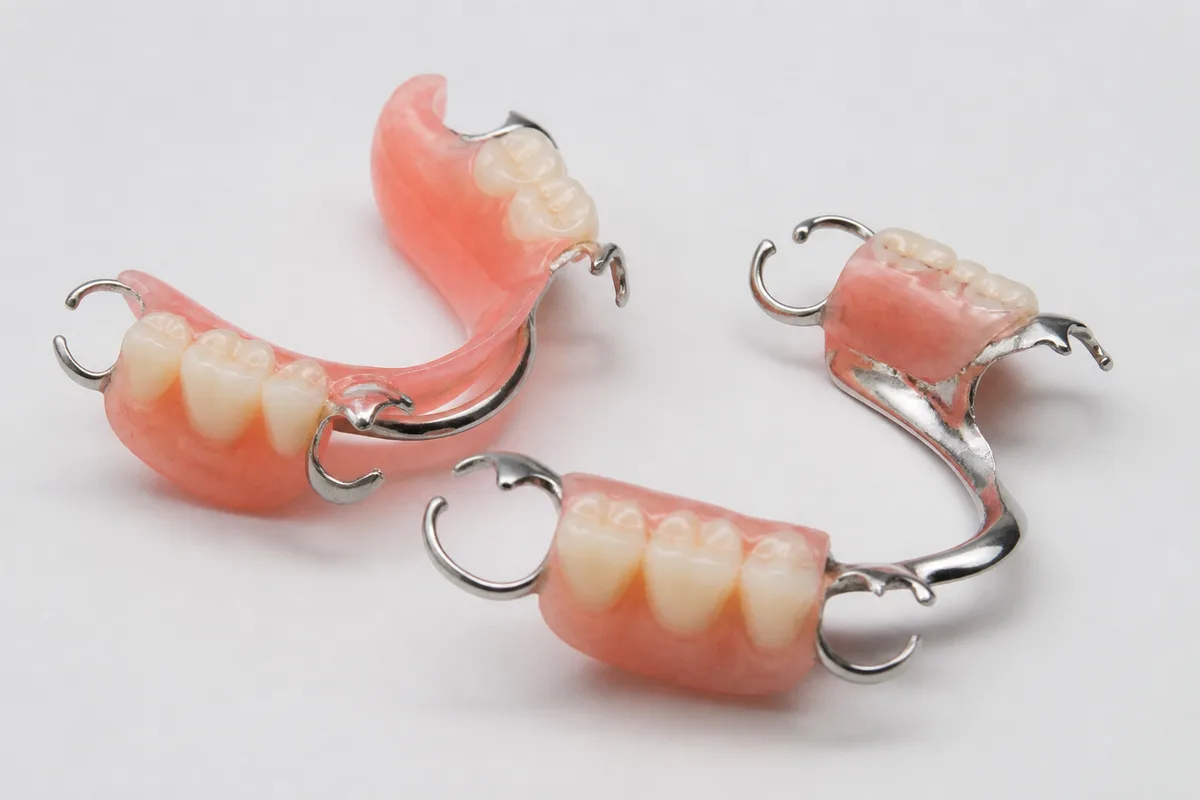
A partial denture replaces some teeth while natural teeth remain, held by clasps or precision attachments. Cast metal frameworks are thinner, stronger and better fitting than all-acrylic partials. Flexible thermoplastic partials are more comfortable and less visible but do not support load as well and are harder to adjust or reline.
An immediate denture is placed on the day the remaining teeth are removed so you are never without teeth. It is made in advance from models of your mouth before extraction, which means the fit is an educated prediction. As the gums heal and shrink over the following months it requires relining, and often a definitive denture afterward. It is a trade-off of fit for the certainty of never appearing in public without teeth, and for many people that is worth it.
Implant-supported options
This is the most significant improvement available. An implant-retained overdenture clips onto two or more implants, most commonly in the lower jaw where conventional dentures perform worst. It is still removable for cleaning, but it does not lift, rock or slide, and chewing efficiency improves dramatically.
Upper overdentures on four or more implants can often be made without covering the palate, which restores taste and the sensation of temperature in a way patients describe as transformative.
A fixed full-arch bridge on four to six implants is not removed by the patient at all and comes closest to natural teeth in function. It costs considerably more, requires adequate bone or grafting, and demands meticulous cleaning underneath with specialized aids. As few as two implants in the lower jaw make a large difference, so this does not have to be all or nothing.
How dentures are made
Conventional fabrication runs across several appointments. Preliminary impressions produce custom trays; final impressions capture the supporting tissues in detail, including how the cheeks and tongue move against the borders, which is what determines the seal. Bite records establish how the jaws relate to each other and how much vertical space the teeth should occupy.
A wax try-in follows, with the teeth set in wax so you can see and approve the tooth shade, shape, arrangement and the fullness of the lip before anything is processed. This is the stage to be particular. Changes here are simple; changes after processing are not.
The denture is then processed in acrylic, finished, and delivered, with adjustment appointments over the following weeks to relieve sore spots. Those adjustments are a normal part of the process, not a sign that something was made wrong.
The adjustment period, realistically
The first few weeks involve increased salivation, a sense of bulk, some altered speech, and sore spots. Reading aloud for fifteen minutes a day accelerates speech adaptation more than anything else. Start with soft foods cut small, chew on both sides simultaneously to keep the denture stable rather than tipping it, and work up gradually.
Do not adjust a denture yourself. Filing it at home almost always makes the fit worse permanently. Wear it for a day before an adjustment appointment so the sore spot is visible and can be relieved precisely.
Expect chewing efficiency well below natural teeth with a conventional denture, roughly a fraction of it, which is why hard and sticky foods stay difficult. Adhesives are a legitimate aid for confidence but should not be compensating for a genuinely poor fit.
Long-term care and relines
Clean dentures over a folded towel or a basin of water, because acrylic fractures readily on a hard sink. Use a denture brush and soap or a denture cleaner, never regular toothpaste, which is abrasive enough to scratch the surface and create plaque traps. Soak overnight to keep the acrylic dimensionally stable, and brush your gums, tongue and palate daily.
Take them out at night. Leaving dentures in continuously is the main cause of denture stomatitis, a fungal inflammation of the palate.
The jaw ridge continues to resorb underneath a denture, so a denture that fit well three years ago will loosen. Relining, which refits the tissue surface to the current ridge shape, is typically needed every two to five years, and dentures generally need remaking every five to ten. Keep attending regular examinations even with no natural teeth, for oral cancer screening and to check fit. If your denture is loose or you are facing losing teeth, call Cedar Creek Dentistry in Portland and we will go through the options including implant support.
Questions about your own care? The team at The Best Dentist In Portland, Oregon is happy to help — call us at (503) 646-1811.
This article is for general information only and is not medical advice.