Our Services
Endodontics: The Field That Saves Teeth
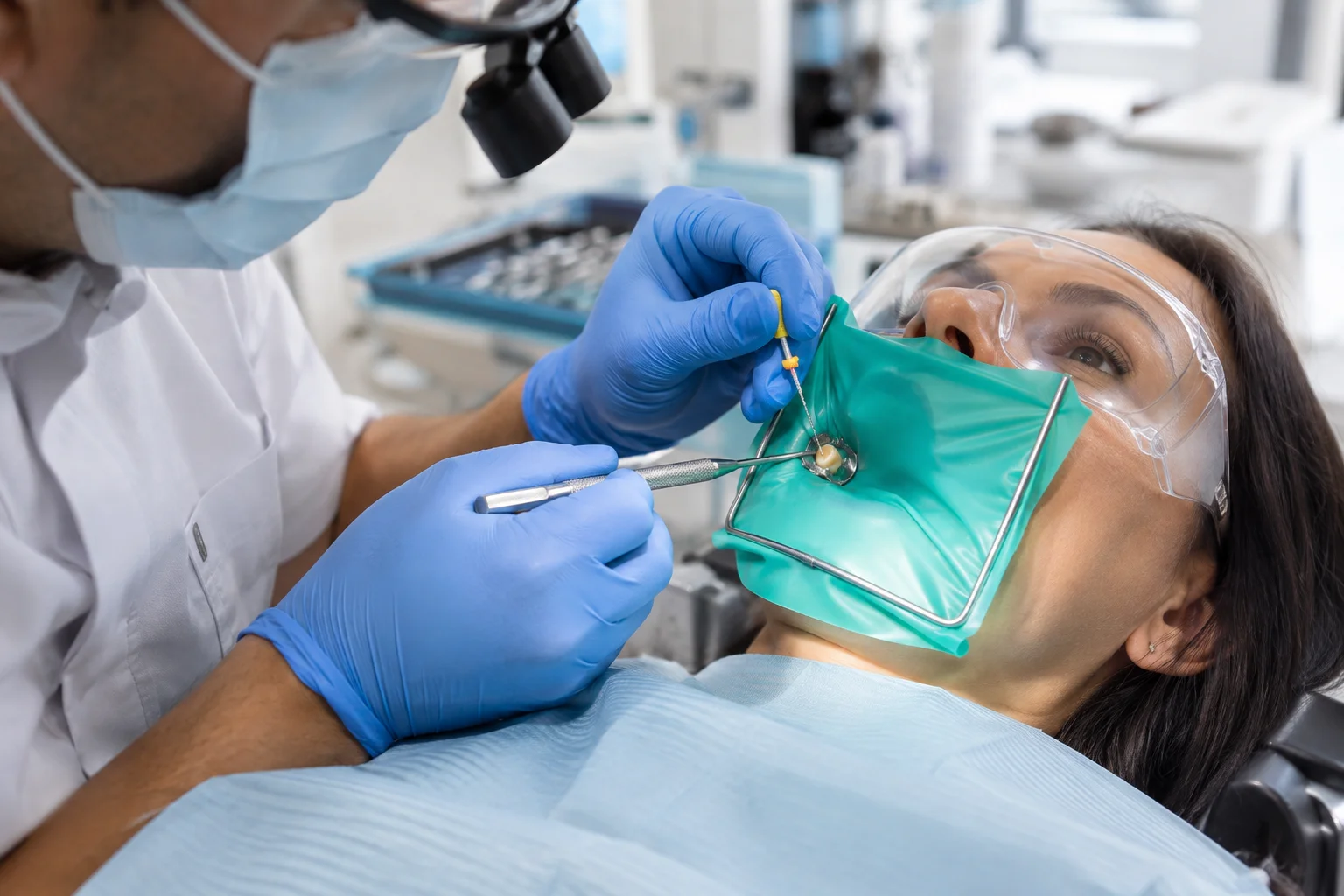
Endodontics is the branch of dentistry concerned with the inside of the tooth: the pulp, the root canal system, and the tissues immediately surrounding the root tips. Most people know it only as root canal treatment, which is its best-known procedure but far from its only one.
The unifying purpose of the field is keeping natural teeth in function. A retained natural tooth maintains bone, preserves the ligament that gives you fine feedback when you bite, and costs less over a lifetime than removal and replacement.
The anatomy that makes it difficult
A root canal system is not a simple tube. A molar may have three or four main canals and frequently more, with an additional canal in the mesiobuccal root of upper molars that is present in the majority of cases and is easy to miss. Canals curve, split, rejoin, and end in branching deltas at the root tip.
They also contain lateral canals that exit the side of the root, and a network of microscopic tubules running through the dentin. No instrument reaches all of it, which is why disinfecting irrigation solutions, activated with ultrasonic energy in many cases, do a large part of the work.
This complexity is why magnification and illumination matter so much in endodontics, and why cone beam imaging, which shows the root anatomy in three dimensions rather than as a flattened shadow, has changed diagnosis substantially over the past fifteen years.
Preserving a living pulp
Not every compromised pulp needs removing. Vital pulp therapy is a growing area, based on the recognition that pulp tissue has real healing capacity when the source of inflammation is removed and the exposure is sealed properly.
Indirect pulp capping leaves a thin layer of affected dentin over a nearly exposed pulp and seals it, rather than excavating into the nerve. Direct pulp capping places a bioceramic material onto a small, clean exposure. Pulpotomy removes only the inflamed coronal portion of the pulp and leaves the healthy radicular tissue in place.
Modern bioceramic materials have improved the success of these procedures considerably. They are most predictable in younger patients with a clear history and without spontaneous pain, and the tooth is followed up over years to confirm the pulp remains healthy. When they work, the tooth keeps its blood supply, its sensory function and its structural integrity.
When treatment needs revisiting
Root canal treatment succeeds in roughly ninety to ninety-five percent of cases. When it does not, the usual reasons are a canal that was never located, incomplete cleaning of a complex system, a fracture, or leakage that reintroduced bacteria, often because the final restoration was delayed or its seal failed.
Non-surgical retreatment is the first option: the restoration and the previous filling material are removed, the canal system is re-cleaned with the benefit of better information, any missed anatomy is found and treated, and it is refilled. Success rates for retreatment are good, though somewhat below those for initial treatment.
When retreatment is not possible or has failed, apicoectomy is the surgical route. A small incision is made in the gum, the last few millimeters of the root tip are removed along with any surrounding infected tissue, and the canal is sealed from the end with a bioceramic material. It is done under local anesthetic, takes under an hour in most cases, and heals over a few months.
Other problems endodontics addresses
Cracked teeth are a common and frustrating diagnosis. A crack that has reached the pulp causes classic symptoms of sharp pain on release of biting pressure and sensitivity to cold, and endodontic treatment plus a crown can save many of them. A crack that extends vertically down the root cannot be repaired and the tooth is lost, which is a distinction worth making early rather than after money has been spent.
Traumatic injuries fall largely to endodontics for follow-up, since a tooth that has been knocked out, displaced or fractured may lose its pulp months or years later. Teeth injured before the root has finished forming present a specific challenge, handled with apexification, which creates a barrier at the open root end, or with regenerative endodontic procedures that aim to encourage continued root development.
Internal bleaching treats a single dark tooth that has had root canal treatment, lightening it from the inside rather than veneering over it. Resorption, in which the body begins dissolving the tooth structure from inside or outside, is diagnosed and managed here too.
The restoration is part of the treatment
The most important factor in whether a root-canal-treated tooth survives long term is what goes on top of it. A tooth left with a temporary filling for months will leak, reinfect, or fracture.
Back teeth generally need full cuspal coverage, meaning a crown or an onlay, because a tooth with an access opening through the middle and no nerve is prone to splitting. Front teeth with modest access openings can often be restored with bonding alone.
Get the final restoration done promptly. If you have had root canal treatment and never returned for the crown, that tooth is on borrowed time. Call Cedar Creek Dentistry in Portland and let us check it.
Questions about your own care? The team at The Best Dentist In Portland, Oregon is happy to help — call us at (503) 646-1811.
This article is for general information only and is not medical advice.