Our Services
Pediatric Dentistry: Care That Grows With Your Child
Children's dentistry is less about small versions of adult procedures and more about two things: preventing disease during the years when it does the most damage, and building an attitude toward dental care that survives into adulthood.
Both are easier than they sound, and both depend heavily on starting early rather than waiting until something hurts.
When to start
The recommendation from both pediatric dental and pediatric medical bodies is a first visit by the first birthday, or within six months of the first tooth appearing. That surprises many parents, since there is very little to examine at that age.
The point is not the examination. It is establishing a relationship before there is a problem, so the child's first experience of a dental office is a friendly, uneventful one rather than a painful emergency. It also gives us a chance to check how the teeth and jaws are developing, and to go through the practical things: how to clean an infant's teeth, how much toothpaste, bottle and cup habits, and what to do if a toddler knocks a tooth loose.
Early childhood decay is a real and underappreciated problem, capable of destroying baby teeth in a matter of months when a child falls asleep with a bottle of milk or juice. Catching risk factors at age one prevents a general anesthetic at age three.
Baby teeth matter more than people think
The common assumption is that baby teeth do not matter because they fall out anyway. In practice they hold the space for the permanent teeth beneath them, guide those teeth into position, and are essential for chewing, speech development and appearance during years when children are learning all three.
A baby molar lost early allows the teeth behind it to drift forward, and the permanent tooth arrives to find no room, producing crowding that then requires orthodontic treatment. A space maintainer placed after an early loss is far cheaper than what it prevents.
Baby teeth also get abscesses, and an infection in a baby tooth sits directly above the developing permanent tooth. Decay in baby teeth progresses faster than in adult teeth because the enamel is thinner, which is why a small spot seen at one visit can be a large cavity six months later.
Prevention through the school years
Brush twice daily with fluoride toothpaste: a smear the size of a grain of rice under age three, a pea-sized amount from three to six, with an adult doing or supervising the brushing until around age seven or eight, when manual dexterity catches up. Children who can write cursive can generally brush properly.
Start flossing when any two teeth touch. Seal the permanent molars as they arrive around ages six and twelve, before decay gets into the grooves. Fluoride varnish at recall visits is quick and effective for children at any meaningful risk.
Diet advice should focus on frequency. Constant grazing and sipping keeps the mouth acidic all day. Sports drinks, flavored waters, fruit juice and gummy vitamins are all more damaging than parents expect. Water between meals is the single best habit.
Growth, habits and orthodontic timing
An orthodontic evaluation around age seven is standard, not because most seven-year-olds need braces but because a few problems are much easier to correct while the jaws are still growing: crossbites, severe crowding, an underbite, or a narrow upper jaw. Early intervention in those specific cases can reduce or avoid extractions later.
Thumb sucking and pacifier use are normal in infancy and generally harmless if they stop by around age three. Persisting past the eruption of the permanent front teeth can push them forward and change the shape of the palate.
Mouth breathing, chronic snoring and restless sleep in a child deserve attention rather than dismissal, as they can relate to enlarged tonsils and adenoids and to facial growth patterns. It is worth mentioning at a dental visit.
Injuries and emergencies
Chipped front teeth are common once children start running, cycling and playing sport. Save any fragments in milk and come in, because they can sometimes be bonded back on.
A knocked-out permanent tooth is a time-critical emergency: hold it by the crown, do not scrub it, replace it in the socket if possible or store it in milk, and get to a dentist within the hour. A knocked-out baby tooth is never replanted, because doing so risks damaging the permanent tooth developing above, but should still be assessed.
A mouthguard for organized sport prevents most of this. Custom guards are worth it for children in collision sports and need remaking as they grow.
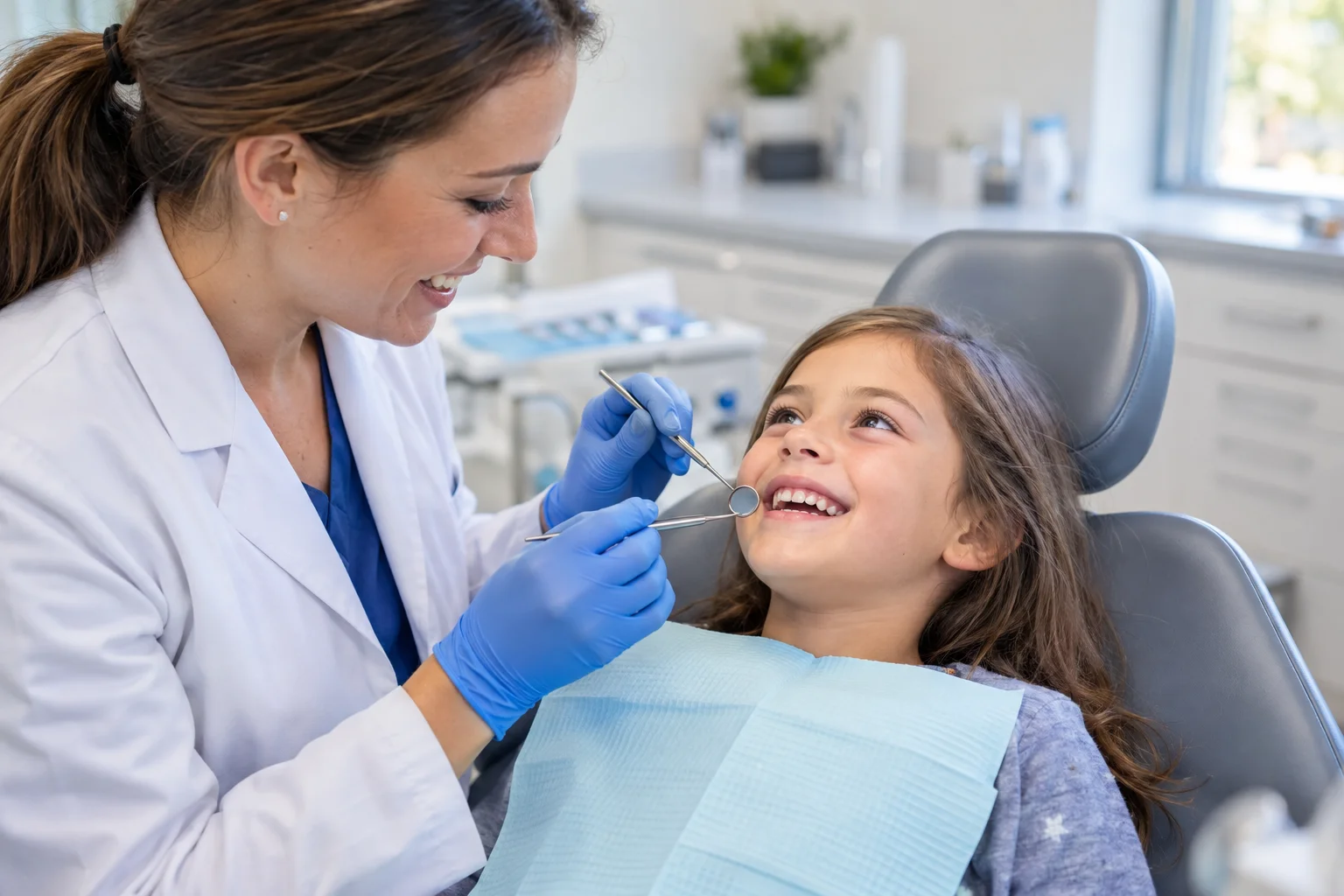
Making visits easy
Language matters more than anything else. Avoid words like hurt, shot, pain and drill, even in reassurance, since saying it will not hurt introduces the idea. Let the dental team use their own vocabulary with your child.
Do not use the dentist as a threat for poor brushing, do not share your own dental anxiety, and schedule young children in the morning when they are rested. Keep the description of the visit simple and positive: we are going to count your teeth and take pictures of them.
Most children do well with a tell-show-do approach, where each instrument is explained and demonstrated before it is used. For children who need more support, nitrous oxide is safe, effective and wears off quickly. To get your child started, or if it has been a while, call Cedar Creek Dentistry in Portland.
Questions about your own care? The team at The Best Dentist In Portland, Oregon is happy to help — call us at (503) 646-1811.
This article is for general information only and is not medical advice.