Our Technology
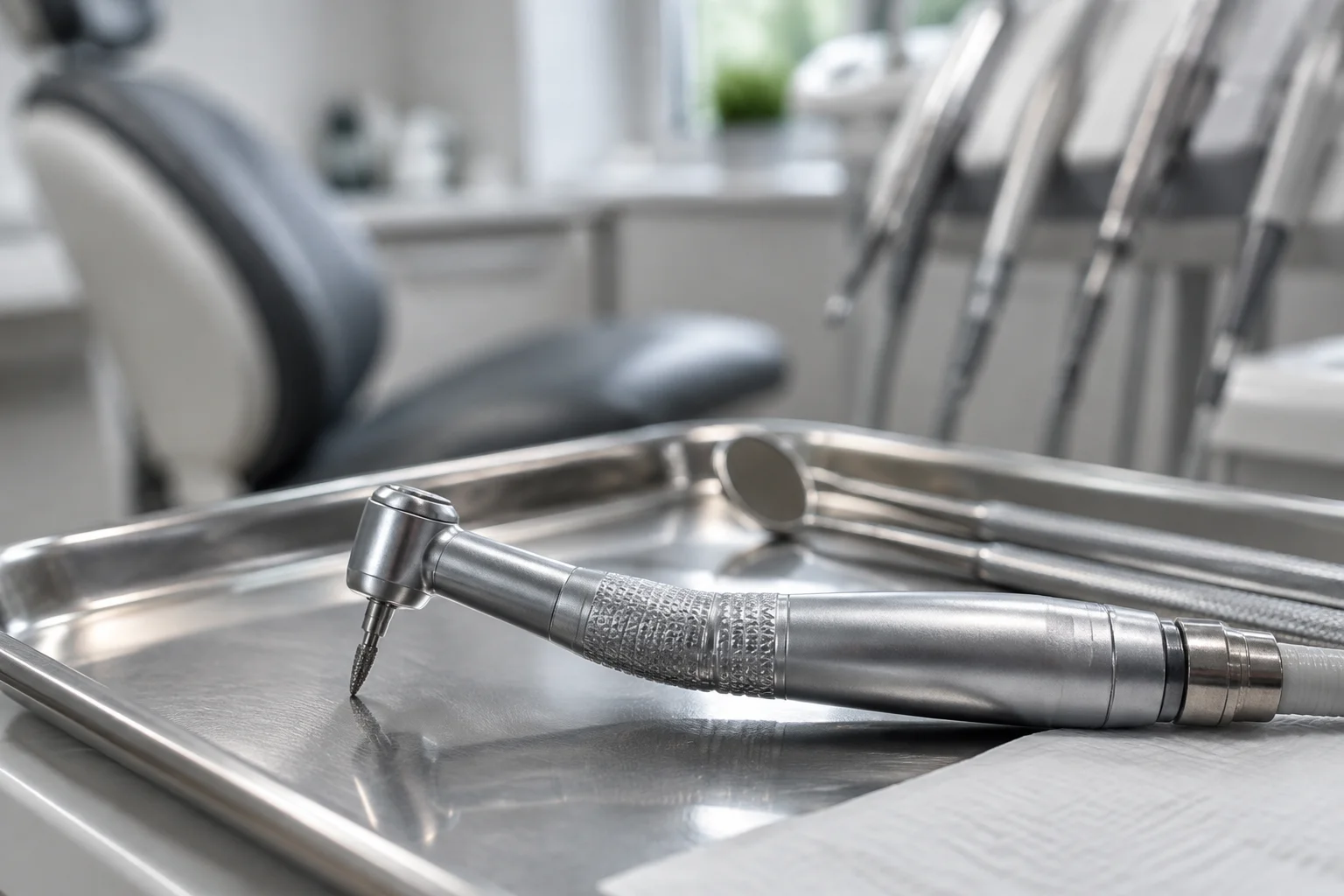
Electric Handpieces: Quieter, Smoother, More Precise
The sound of a dental drill is, for a lot of people, the single most anxiety-inducing thing about a dental visit. It is a high-pitched whine, and it is produced by compressed air spinning a tiny turbine at extremely high speed.
Electric handpieces work on a completely different principle, and one of the first things people notice is that they sound different: a lower, steadier hum rather than a shrill whine. That is a side effect of the engineering rather than the point of it, but it is a welcome one.
Air turbine versus electric motor
A traditional high-speed handpiece is driven by compressed air blown across a small turbine inside the head. It reaches very high rotational speeds, but it produces relatively little torque, and the torque it produces falls away the moment the bur meets resistance.
That is why an air-driven drill slows noticeably when it contacts hard tooth structure or an old metal restoration, and why it has to be used with a light, intermittent touch, letting it come back up to speed. It is also the source of the characteristic pitch change during a procedure.
An electric handpiece uses a small precision motor with gearing. The control unit holds the set speed regardless of load, so the bur does not slow down when it meets resistance. Speed is selectable across a wide range and displayed on the unit, and torque is several times higher than an air turbine can deliver.
What constant torque changes
Cutting is smoother and more predictable. Because the bur maintains speed, it removes material at an even rate rather than in the stop-start rhythm an air turbine produces, which translates into less vibration transmitted into the tooth and, for many patients, a noticeably less jarring experience.
It also produces a cleaner cut surface. Crown and inlay preparations benefit from this directly: smoother, more accurate margins mean a better-fitting restoration and a better long-term seal, which is the main determinant of how long that restoration lasts.
Concentricity matters too. Electric handpieces have very little bur wobble compared with air turbines, which is part of why the cut is cleaner and why the instrument runs quieter. Removing old crowns, sectioning teeth, and cutting through metal restorations are all faster with the available torque, which shortens the time you spend with your mouth open.
The experience from the chair
The noise difference is real. The pitch is lower and the volume steadier, and for patients whose anxiety is triggered specifically by the sound, that is meaningful. It is not silent, and no handpiece is.
Less vibration is the other commonly reported difference. The high-frequency buzz of an air turbine is transmitted through the tooth and is part of what people dislike; a smoother cut reduces it.
Shorter procedures follow from more efficient cutting, particularly on longer appointments. None of this changes whether you need anesthetic, and it does not make a procedure painless on its own; local anesthetic still does that work.
Where each still has a place
Electric handpieces are heavier and larger in the head than air turbines, and the difference is noticeable in very tight access, particularly at the back of the mouth in a patient with limited opening. Air-driven instruments remain useful there.
Heat management also has to be handled deliberately, because sustained torque generates heat that a stalling air turbine would not. Adequate water spray and appropriate technique are part of using them properly.
Most practices, including ours, use both and select the instrument that suits the procedure. If the sound of dental treatment is part of what keeps you away, tell us — between electric handpieces, headphones and nitrous oxide there is usually a combination that makes it manageable. Call Cedar Creek Dentistry in Portland.
Questions about your own care? The team at The Best Dentist In Portland, Oregon is happy to help — call us at (503) 646-1811.
This article is for general information only and is not medical advice.