Our Technology
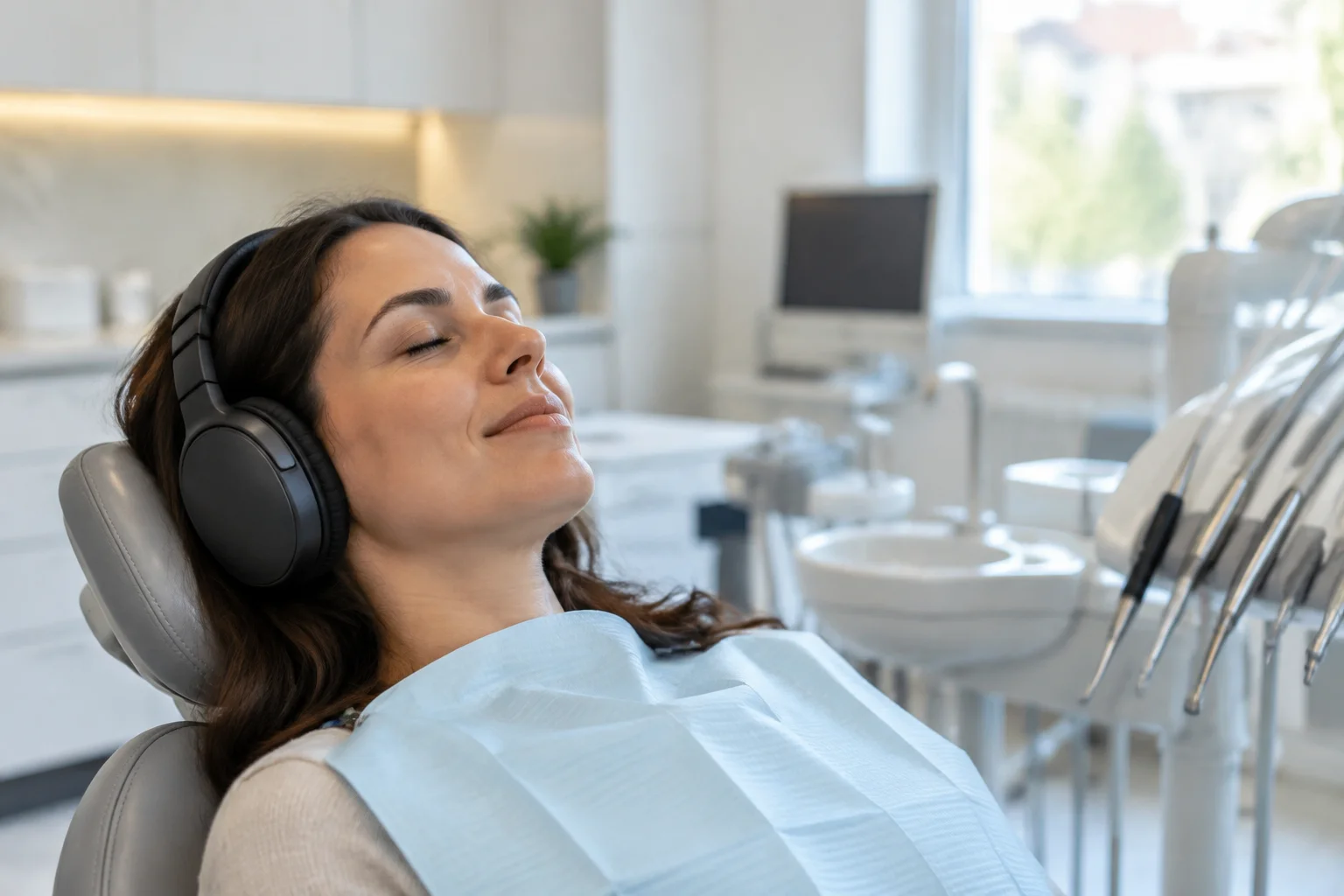
Noise-Canceling Headphones: Turning Down the Dental Visit
Ask people what they dislike most about the dentist and a surprising number describe a sound rather than a sensation. The whine of a handpiece, the hiss of suction, the scrape of an instrument. For many patients the anticipation triggered by those sounds is worse than anything actually being done.
Noise-canceling headphones are a small, unglamorous piece of equipment that addresses that directly, and for anxious patients they can be the difference between an appointment that happens and one that gets postponed for another two years.
Why sound matters so much here
Dental anxiety is often a conditioned response. An unpleasant experience, sometimes decades ago and sometimes in childhood, links a particular sound to the expectation of pain, and the sound alone then produces the physical stress response: raised heart rate, tensed muscles, shallow breathing.
Heightened arousal also lowers pain thresholds. A tense patient genuinely experiences more discomfort from the same stimulus than a relaxed one, which is why comfort measures are not an indulgence but part of managing pain.
There is a second, more particular problem: you cannot see what is happening in your own mouth, so sound becomes the only channel of information about it. Without that channel, there is much less to interpret and much less to anticipate.
How noise cancellation works
Active noise cancellation uses external microphones to sample incoming sound, generates an inverted waveform, and plays it through the speakers so the two waves cancel. It works best on steady, predictable, lower-frequency sound: engine hum, ventilation, the constant drone of suction and air.
It is less effective against sudden, irregular, high-frequency noise, which is exactly what a handpiece produces. That is where passive isolation matters: the physical seal of an over-ear cup blocks high frequencies mechanically, and the two together are far more effective than either alone.
Playing your own audio fills the remaining gap. Music, a podcast or an audiobook at a comfortable volume masks what is left, and choosing something familiar and absorbing works better than something new that requires concentration.
Using them in practice
Bring your own if you prefer, or ask us for a set. Load something before you arrive rather than choosing while reclined. Long, continuous audio works better than a playlist with gaps between tracks, because the silences are where the room comes back in.
Agree a hand signal with the team before starting. A raised left hand meaning stop is standard, and it means you can wear headphones without worrying about being unable to speak up. We will also tap your shoulder before saying anything important.
Keep the volume moderate. The goal is masking rather than drowning out, and turning it up high enough to eliminate everything is bad for your hearing across a long appointment. Over-ear designs seal better than earbuds, and a wireless set avoids a cable running across a working field.
The rest of the toolkit
Headphones are one option among several and work well combined with others. Nitrous oxide reduces anxiety within minutes and wears off within minutes, so you can drive yourself home. Oral sedation and intravenous sedation are available for higher levels of anxiety and longer procedures.
Simple measures matter too: a morning appointment before anxiety has had a day to build, a topical anesthetic before any injection, a clear agreed stop signal, a blanket, and a team that tells you what is coming next rather than narrating it in clinical language.
The most useful thing you can do is tell us. Dental anxiety is extremely common and nobody here finds it remarkable, and an appointment planned around it goes very differently from one where it is not mentioned. Call Cedar Creek Dentistry in Portland and say so when you book.
Questions about your own care? The team at The Best Dentist In Portland, Oregon is happy to help — call us at (503) 646-1811.
This article is for general information only and is not medical advice.