Our Technology
Zoom Whitening: In-Office Whitening in One Visit
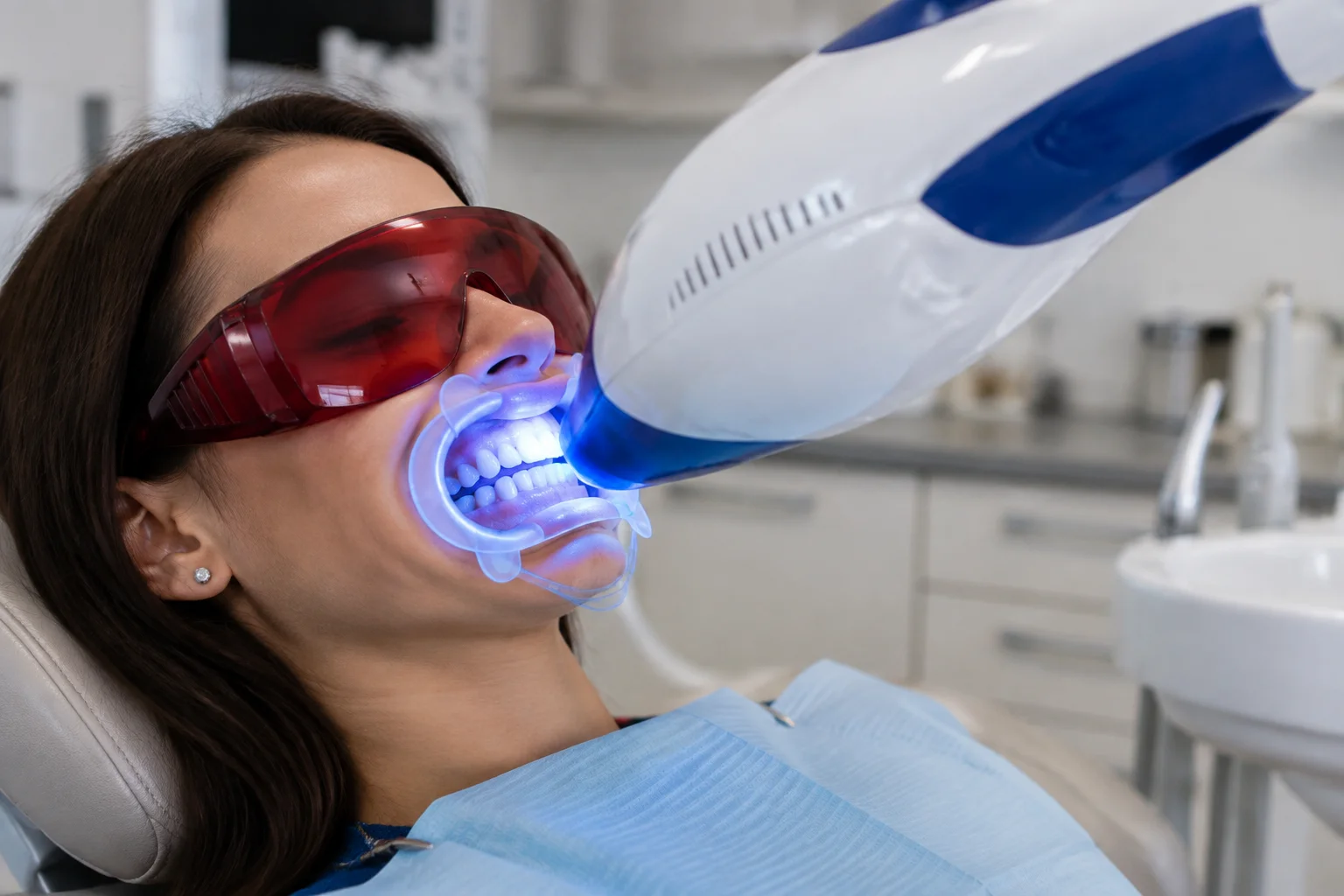
Zoom is an in-office whitening system that uses a high-concentration hydrogen peroxide gel activated by a specialized light, delivered over a single appointment of roughly ninety minutes.
It is the option people choose when there is a date on the calendar: a wedding, a reunion, a job interview. The result arrives in one sitting rather than over two weeks of nightly trays.
What happens during the appointment
Your shade is recorded first with a shade guide and usually a photograph, so the change can be measured rather than guessed at afterward. Your teeth are cleaned, because whitening gel works on the tooth surface and a layer of plaque or stain gets in the way.
Isolation is the part that takes the most care. Your lips and cheeks are retracted, and a protective barrier is painted along the gumline and light-cured to seal it, because a high-concentration peroxide gel in contact with gum tissue causes a temporary chemical burn. Getting that seal right is most of the technique.
The gel is applied to the front teeth and the light positioned. It is left for about fifteen minutes, suctioned off, and reapplied, typically for three or four cycles. Many patients finish with a desensitizing fluoride treatment, and you are usually sent home with custom trays and gel for maintenance.
How the chemistry works, and what the light does
Hydrogen peroxide penetrates enamel and dentin and breaks the large pigmented molecules trapped in the tooth structure into smaller, less visible fragments. This is a chemical change within the tooth, not abrasion of the surface, which is why it lightens intrinsic color that polishing cannot touch.
The light is intended to accelerate the reaction. It is worth being straightforward: the evidence on how much the light contributes is mixed, and several well-conducted studies have found the difference between light-activated and non-activated in-office whitening to be modest. The high concentration of the gel is doing the majority of the work.
Expect several shades of improvement in a single session for typical extrinsic and age-related discoloration. Results vary considerably with the starting shade and the cause of the discoloration, and yellow-toned teeth respond better than gray-toned ones.
Sensitivity and how to manage it
Sensitivity is the most common side effect and affects a substantial proportion of patients. It typically appears during or shortly after the appointment as sharp intermittent zings or a background ache, and it usually resolves within twenty-four to forty-eight hours. It is reversible and does not damage the tooth.
The measures that help: using a potassium nitrate desensitizing toothpaste for a week or two beforehand, a fluoride or desensitizing application at the end of the appointment, over-the-counter anti-inflammatory medication taken before the visit, and avoiding very hot and very cold drinks for a day or two afterward.
For the forty-eight hours after treatment, the enamel is temporarily more permeable, so avoid coffee, tea, red wine, dark sauces, berries and tobacco. This white diet window has a real effect on how well the result holds.
Who it suits, and what it will not do
It suits healthy teeth and gums with extrinsic or age-related discoloration, and anyone who wants the result now. It is not appropriate over untreated decay, leaking restorations, active gum disease or exposed sensitive roots; those are treated first.
Crowns, veneers, bonding and tooth-colored fillings do not whiten. If you have a filling in a front tooth, whitening the surrounding enamel will make that filling look darker by comparison, and the correct sequence is to whiten first, wait about two weeks for the shade to stabilize, and then replace the restoration to match.
Whitening is also not permanent; expect gradual regression over one to three years depending on your habits, which is why the take-home trays for periodic touch-ups matter more than they sound. If you want to talk through whether in-office or take-home whitening fits your situation better, call Cedar Creek Dentistry in Portland.
Questions about your own care? The team at The Best Dentist In Portland, Oregon is happy to help — call us at (503) 646-1811.
This article is for general information only and is not medical advice.