Our Services
Botox in Dentistry: Therapeutic and Cosmetic Uses
Botulinum toxin, known by brand names including Botox, is a purified protein that temporarily reduces the ability of a muscle to contract. In dentistry it is used for two broad purposes: reducing the force of overactive chewing muscles, and refining the appearance of the smile and the lower face.
Dentists are well placed to administer it in this region, because head and neck anatomy is central to dental training. It is also a treatment with real limits, and it is worth being clear about what it does and does not do.
How it works
Muscles contract when nerve endings release acetylcholine across the junction with the muscle fiber. Botulinum toxin blocks that release, so the injected muscle contracts more weakly for as long as the effect lasts.
It is a local effect confined to a small area around the injection site, dose-dependent, and completely temporary. Nerve endings regenerate and function returns over roughly three to four months.
Onset is not immediate. Most people notice the effect beginning within three to five days and reaching its full extent at around two weeks, which is why assessment and any touch-up are scheduled at the two-week mark rather than sooner.
Therapeutic uses in the jaw
The most established dental application is in the masseter, the thick muscle at the angle of the jaw, for people with severe clenching and grinding and the muscle pain that accompanies it. Reducing the force these muscles can generate lowers the load reaching the teeth, the restorations and the joints, and for many people substantially reduces morning jaw soreness and tension headaches.
It is an adjunct, not a replacement for a night guard. The guard protects the tooth surfaces from wear and distributes contact; the injection reduces the force. Used together in a severe bruxer they address different parts of the problem.
Other therapeutic applications include myofascial pain in the temporalis, some chronic headache presentations, and in specific cases, orofacial movement disorders. Hypertrophy of the masseters, where the muscles have enlarged from years of clenching and produce a squared lower face, responds to the same treatment with a slimming effect that patients often value cosmetically as well.
Smile and facial esthetics
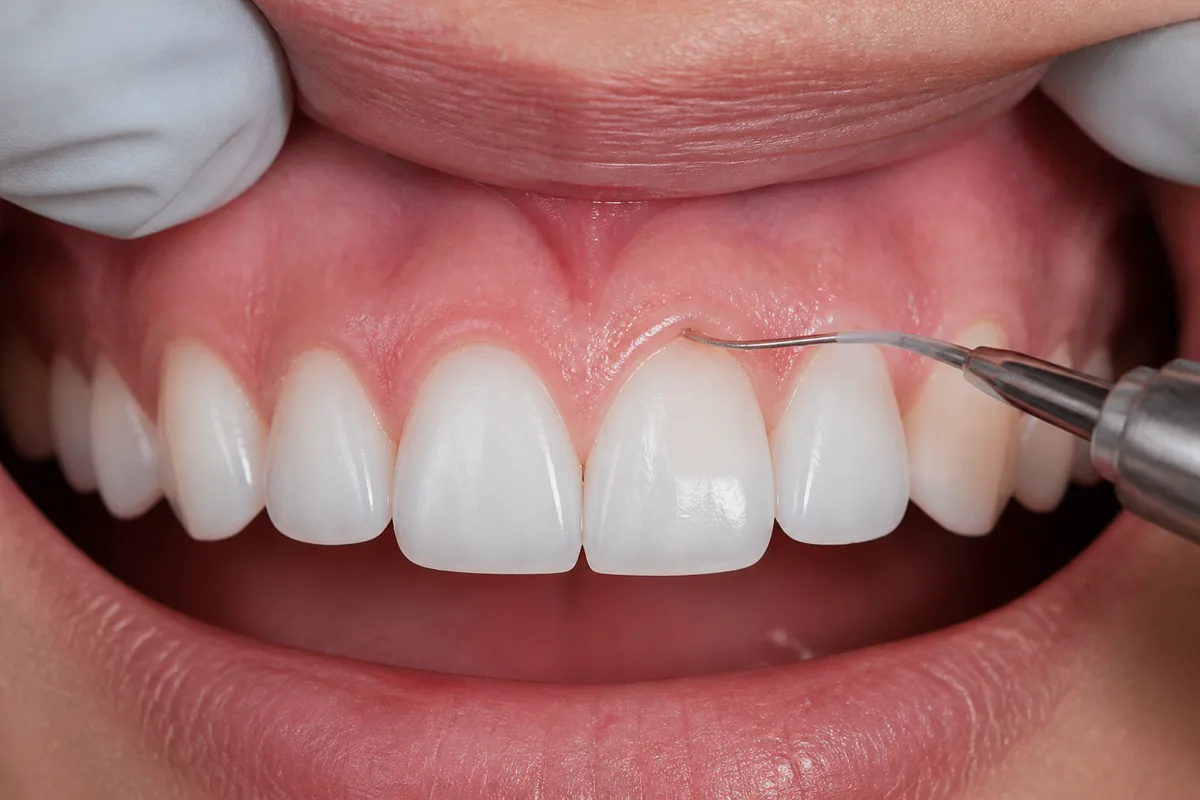
An excessive gingival display, commonly called a gummy smile, sometimes results from a hyperactive upper lip elevator muscle rather than from the position of the teeth or gums. In those cases a small, precisely placed dose relaxes the muscle so the lip does not lift as far, and the smile shows less gum.
This is a genuinely useful alternative to surgery for the right diagnosis, and a poor substitute for the wrong one. If the gum display is caused by short clinical crowns or excess gum tissue, crown lengthening is the correct treatment; if it is caused by vertical jaw excess, the treatment is orthodontic or surgical. Diagnosing which applies is the important part.
Dentists also treat the perioral area: softening the vertical lines above the lip, correcting a downturned mouth corner, reducing a dimpled chin, and easing the lines around the smile. Because these areas surround the work dentists already do, they are a natural extension. Treatment of the forehead and around the eyes is offered in many dental practices as well, though it sits further from the core of the discipline.
What treatment involves
A consultation covers your medical history, medications, previous treatments and your specific goals, and includes an assessment of muscle activity, facial symmetry and, for smile-related concerns, a proper diagnosis of the cause.
The treatment itself takes a few minutes. Very fine needles are used and most people describe a brief sting. Topical numbing or ice can be used. There is no downtime, though you should stay upright for a few hours, avoid rubbing the area, and skip strenuous exercise, alcohol and heat for the rest of the day.
Common side effects are small bruises, brief tenderness and occasionally a mild headache. The meaningful risk is diffusion into an adjacent muscle producing an unintended effect, such as an asymmetric smile or a heavy eyelid, which is uncommon, technique-related and temporary. Treatment is avoided in pregnancy and breastfeeding, in people with certain neuromuscular disorders, and where there is infection at the injection site.
Expectations and limits
The effect lasts around three to four months, sometimes longer for masseter treatment at therapeutic doses, and repeat treatment is needed to maintain it. Some people find that with regular treatment for clenching the intervals lengthen as the habit and the muscle bulk reduce.
It relaxes muscles. It does not restore lost volume, tighten loose skin, or change the position of teeth or bone. Static lines present when your face is at rest respond much less than dynamic lines that appear with movement.
For grinding specifically, it treats the force rather than the cause, so the underlying contributors, stress, sleep quality, medication effects and possible sleep apnea, still deserve attention. If you clench severely, wake with jaw pain, or are bothered by a gummy smile, come in for an assessment and we will tell you honestly whether this is the right tool. Call Cedar Creek Dentistry in Portland.
Questions about your own care? The team at The Best Dentist In Portland, Oregon is happy to help — call us at (503) 646-1811.
This article is for general information only and is not medical advice.