Our Services
Dental Crowns: A Complete Guide
A crown is a custom covering that fits over the entire visible portion of a tooth. Where a filling sits inside a tooth and relies on the surrounding walls for support, a crown wraps around those walls and holds them together.
That difference is the whole point. Fillings restore shape; crowns restore strength. Understanding when a tooth has crossed the line between the two makes a crown recommendation much easier to evaluate.
When a tooth actually needs one
The clearest case is a tooth that has lost so much structure that the remaining walls are thin and unsupported. Back teeth flex under hundreds of pounds of force, and a cusp with a large filling wedged beside it eventually splits away. A crown converts those separate walls back into a single reinforced unit.
Teeth that have had root canal treatment usually need crowns, especially molars and premolars. Removing the nerve requires removing structure from the middle of the tooth, and the tooth loses the internal hydration that gave it some resilience. Crowned root-canaled molars survive at dramatically higher rates than uncrowned ones.
Other indications include a cracked tooth where the crack has not reached the root, a tooth worn down substantially by grinding or acid erosion, a tooth being used as the anchor for a bridge, an implant restoration, and occasionally a cosmetic case where a front tooth is too compromised for a veneer.
Materials, and what each is good at
Zirconia is the workhorse for back teeth. It is extremely strong, resists fracture better than any other ceramic, and can be milled thin enough to preserve more tooth structure. Older zirconia was opaque, but current generations are considerably more translucent and suitable for many visible teeth.
Lithium disilicate sits in the middle: strong enough for most situations, with noticeably better optical properties than zirconia. It bonds reliably to the tooth and is the default choice for many front teeth and for premolars where esthetics matter.
Layered porcelain over a zirconia or metal core gives a ceramist the greatest control over color, translucency and surface texture, which is why a demanding single front tooth is often still made this way. Full gold is out of fashion but remains, from a purely mechanical standpoint, the kindest material to the opposing tooth and the longest-lived of all. Porcelain fused to metal is now largely superseded, mostly because the metal margin eventually shows as gums recede.
What the appointments involve
The tooth is numbed and any decay or old filling material removed. The tooth is then reduced by roughly one to two millimeters on all surfaces so that the crown has uniform thickness without making the tooth bulky. If too little tooth remains to hold a crown, a build-up is placed first, and occasionally a minor gum procedure is needed to expose enough structure.
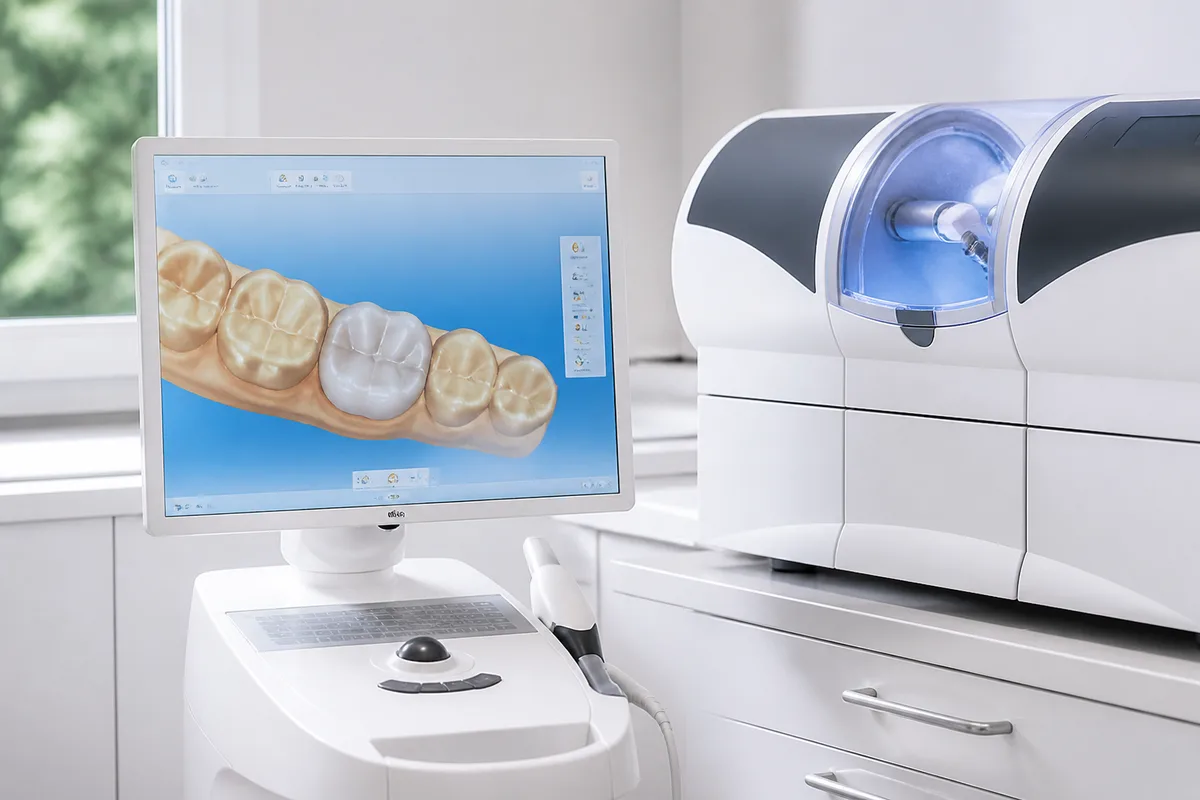
A digital scan or impression captures the prepared tooth, the neighbors, and your bite. With same-day technology, the crown is designed and milled in the office and bonded at that visit. With a laboratory crown, a temporary is placed and the final crown is cemented two to three weeks later.
At delivery the fit, the contacts with the neighboring teeth, the margin at the gumline and the bite are all checked and adjusted before cementation. Getting your bite exactly right is the most common source of post-delivery discomfort, so speak up if anything feels tall once the numbness fades.
Living with a crown
Mild cold or pressure sensitivity for a few weeks is normal, particularly on a tooth that still has a live nerve. Gums around a new crown are often tender for a few days because they were retracted during the procedure.
Clean the margin carefully. A crown cannot decay, but the tooth underneath it can, and the junction at the gumline is where that happens. Floss daily, and if floss shreds or catches at that spot, tell us, because it usually indicates a rough margin or an open contact.
If you grind your teeth, wear a night guard. Grinding is the leading mechanical cause of ceramic fracture and it is entirely preventable.
How long they last and what goes wrong
Published survival figures generally cluster around ninety percent at ten years and a substantial majority still functioning at fifteen or twenty. Individual results vary enormously with grinding, decay risk, and how much sound tooth was there at the start.
The most common failure is not a broken crown. It is recurrent decay at the margin, and it is largely preventable. Next most common is loss of the nerve in a tooth that had been heavily treated before the crown, which needs root canal treatment through the crown but does not usually require a new crown. Actual fracture of the ceramic is relatively rare with current materials outside of heavy grinders.
If you have a tooth with a large old filling that is starting to feel sensitive or has a visible crack line, come in before it splits. Call Cedar Creek Dentistry in Portland.
Questions about your own care? The team at The Best Dentist In Portland, Oregon is happy to help — call us at (503) 646-1811.
This article is for general information only and is not medical advice.