Our Services
Sleep Apnea and Your Dentist: Oral Appliance Therapy
Obstructive sleep apnea is a condition in which the airway repeatedly narrows or closes during sleep, interrupting breathing dozens or even hundreds of times a night. It is extremely common and substantially underdiagnosed, and the majority of people who have it do not know.
Dentists are well placed to notice it, because the signs frequently show up in the mouth and because one of the effective treatments is an oral appliance. What a dentist does not do is diagnose it: that requires a sleep study interpreted by a physician.
Why it matters beyond snoring
Each apnea event drops blood oxygen and triggers a brief arousal from deep sleep to restore breathing. The person rarely remembers these, but sleep architecture is destroyed, and the repeated oxygen swings and surges of stress hormones have systemic consequences.
Untreated obstructive sleep apnea is associated with hypertension that resists medication, atrial fibrillation, heart failure, stroke, type 2 diabetes, and a markedly increased risk of motor vehicle accidents from daytime sleepiness. It also worsens depression, memory and concentration.
The symptoms to take seriously are loud habitual snoring, witnessed pauses in breathing, gasping or choking awakenings, waking unrefreshed after adequate hours, morning headaches, daytime sleepiness, nocturia, irritability and difficulty concentrating.
What a dentist notices
Tooth wear from grinding is strongly associated with sleep apnea, as grinding episodes often cluster around breathing disruptions. A scalloped tongue border, a large tongue relative to the oral cavity, a high narrow palate, enlarged tonsils, a small or set-back lower jaw, and a crowded-looking throat on examination all raise suspicion.
Dry mouth on waking suggests mouth breathing. Reflux symptoms are more common in people with apnea. Neck circumference, body mass index and a history of hypertension add to the picture.
When these signs line up, the appropriate step is a screening questionnaire and a referral to a physician or sleep specialist for testing, which may be a home sleep apnea test or an in-laboratory study. A diagnosis and a severity rating come from that test, not from the dental chair.
How oral appliances work
The standard dental treatment is a mandibular advancement device: a custom two-piece appliance, worn like a pair of thin night guards connected together, that holds the lower jaw forward during sleep. Moving the jaw forward carries the tongue and soft tissues with it and enlarges the space behind them, which keeps the airway open.
Advancement is adjustable. The device is typically started at a modest protrusion and titrated forward gradually over weeks based on symptom response and partner report, then confirmed with a follow-up sleep test while wearing it.
Tongue retaining devices, which hold the tongue forward with suction rather than moving the jaw, exist for people who cannot use a mandibular device, such as those with too few teeth, but are generally less well tolerated.
Appliance or CPAP
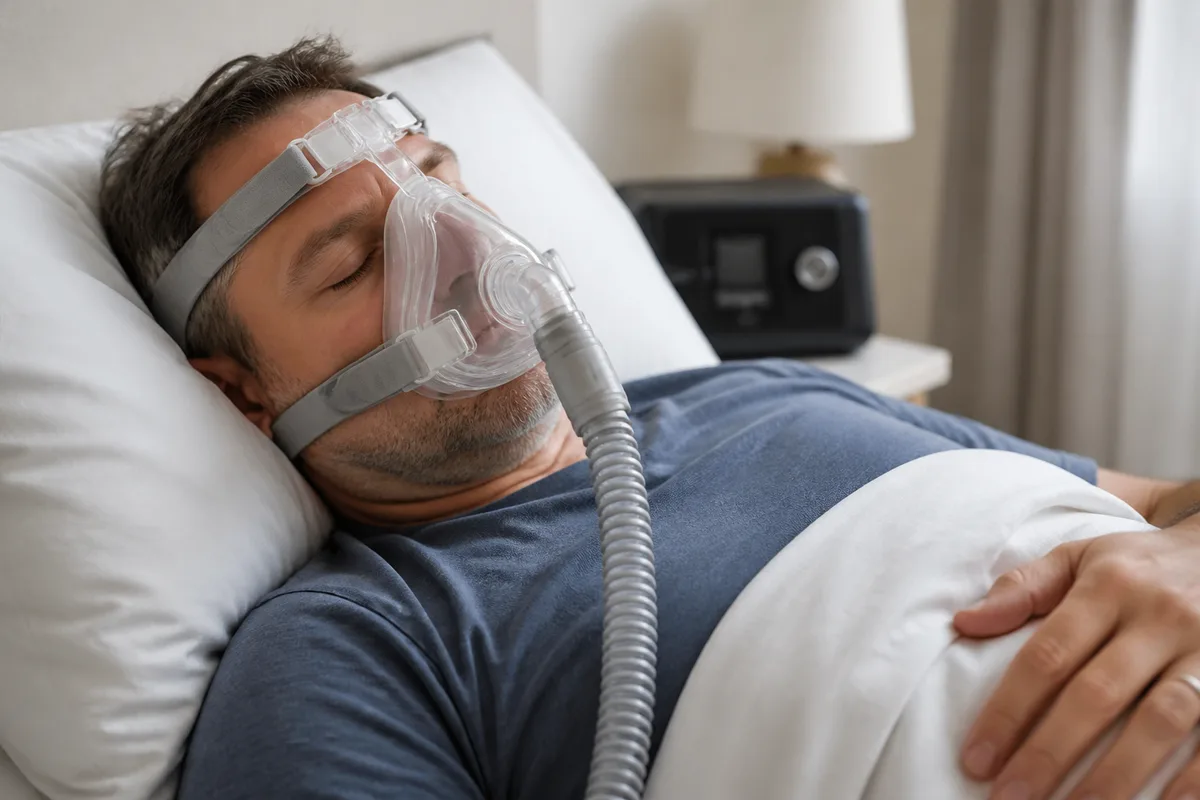
Continuous positive airway pressure remains the most effective treatment available and is the first-line recommendation for moderate and severe apnea. When used consistently, it essentially eliminates events.
The difficulty is adherence. A substantial proportion of people prescribed CPAP do not use it consistently over the long term. An oral appliance reduces apnea events less completely than CPAP but is used far more consistently, and effectiveness in real life is the product of efficacy and adherence. For many people the appliance delivers a better practical outcome.
Oral appliance therapy is recognized as a first-line option for mild to moderate obstructive sleep apnea and for primary snoring, and as an alternative for people with severe apnea who cannot tolerate CPAP. Combination therapy is sometimes used. Weight loss, positional therapy for people whose apnea is worse on their back, avoiding alcohol and sedatives before bed, and treating nasal obstruction all contribute, and surgical options exist for specific anatomical problems.
Side effects and follow-up
Expect an adjustment period of a few weeks with excess salivation, dry mouth, and morning jaw soreness or a bite that feels off for the first fifteen to thirty minutes. Simple morning exercises and a repositioning wafer help the bite settle.
The important long-term consideration is that holding the jaw forward nightly for years can cause gradual tooth movement, most commonly the lower front teeth tipping forward and a reduction in overbite. This is usually minor but should be monitored with regular examinations and records, and discussed before starting rather than discovered later. Pre-existing TMD is not an automatic contraindication but requires careful management.
Appliances need adequate healthy teeth for retention and periodic adjustment, and they are typically replaced every few years. If you snore heavily, wake unrefreshed, or your partner has noticed you stop breathing, the first step is testing. Call Cedar Creek Dentistry in Portland and we will screen you and coordinate with your physician.
Questions about your own care? The team at The Best Dentist In Portland, Oregon is happy to help — call us at (503) 646-1811.
This article is for general information only and is not medical advice.